
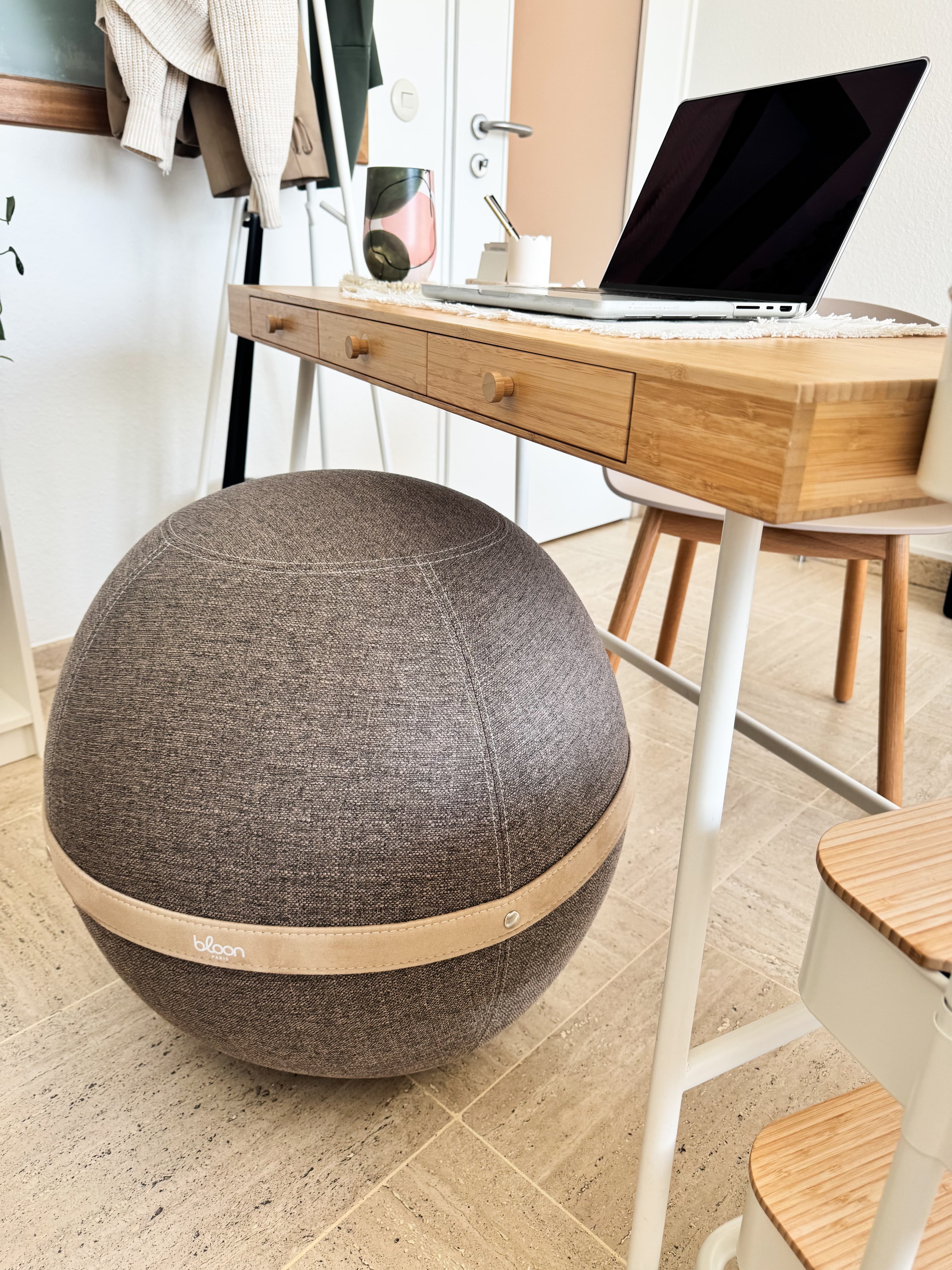
Ever since I installed my Bloon seat at the practice, I've noticed it catches people's attention. Patients walk in, glance discreetly at this fabric-covered ball sitting behind my desk, and often end up asking: "What's that?"
It's a fair question. And it deserves a proper answer.
The real problem isn't sitting. It's not moving.
When we think about work-related back pain, we instinctively imagine that "sitting better" would be enough: back straight, feet flat on the floor, screen at eye level. That's part of the answer, but it falls well short.
What research increasingly points to is the problem of prolonged stillness. A systematic review published in the Annals of Internal Medicine (Biswas et al., 2015) showed that uninterrupted sitting time is associated with an increased risk of chronic disease, cardiovascular mortality and hospitalisations · even among people who exercise regularly. In other words, an hour's run in the evening does not compensate for eight hours of immobility during the day.
Santé publique France confirmed this in 2023 in a review of 28 studies: frequent breaks from sitting have a beneficial effect on health, independently of overall physical activity levels. It isn't sitting itself that causes problems · it's static, uninterrupted sitting.
What it concretely does to your spine
The Institut National de Recherche et de Sécurité (INRS) has documented what happens biomechanically when you settle into a conventional chair: standard seated posture causes a posterior pelvic tilt, which in turn leads to a loss of the natural lumbar curve and permanent stretching of the paraspinal muscles.
In consultations, I see the consequences of this mechanism every day. Lumbar tension, sacroiliac restrictions, cervical pain · often the result of a position held for hours on end. This is not an inevitable consequence of age or fragility: it is frequently simply the result of too many hours without movement.
Why dynamic sitting, and why the Bloon
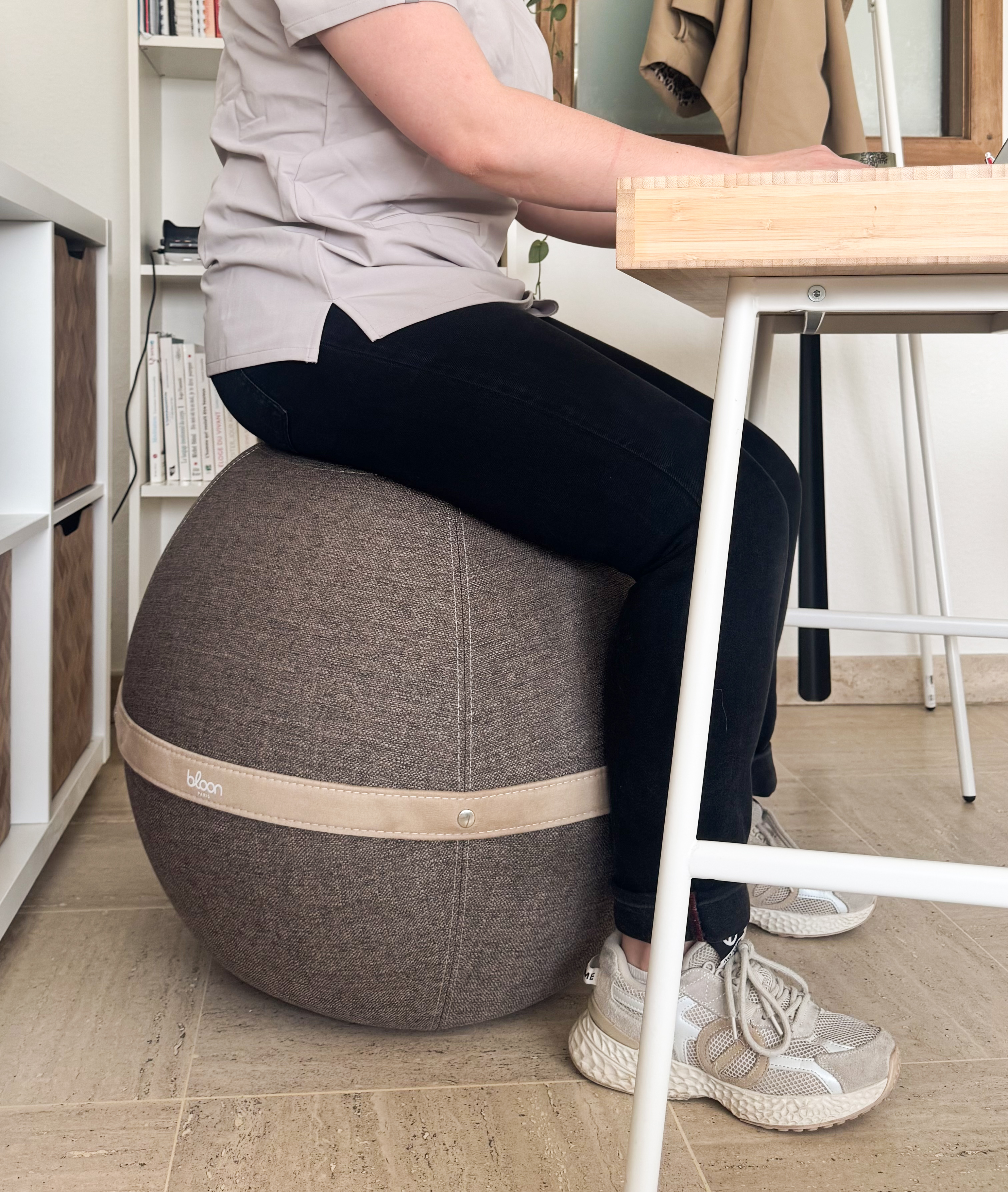
A study published in Applied Ergonomics in 2024 (Noguchi et al.) compared dynamic sitting with traditional sitting in office workers. The result: dynamic sitting increases micro-movements of the spine without negatively affecting lumbar posture, pain or productivity. It's not spectacular · and that's precisely what makes it interesting. It's simply a discreet, continuous movement, naturally integrated throughout the working day.
Another study (Journal of Physical Therapy Science, Tanoue et al., 2021) showed that a seating position favouring anterior pelvic tilt and postural micro-adjustments reduces lumbar discomfort compared with a standard chair.
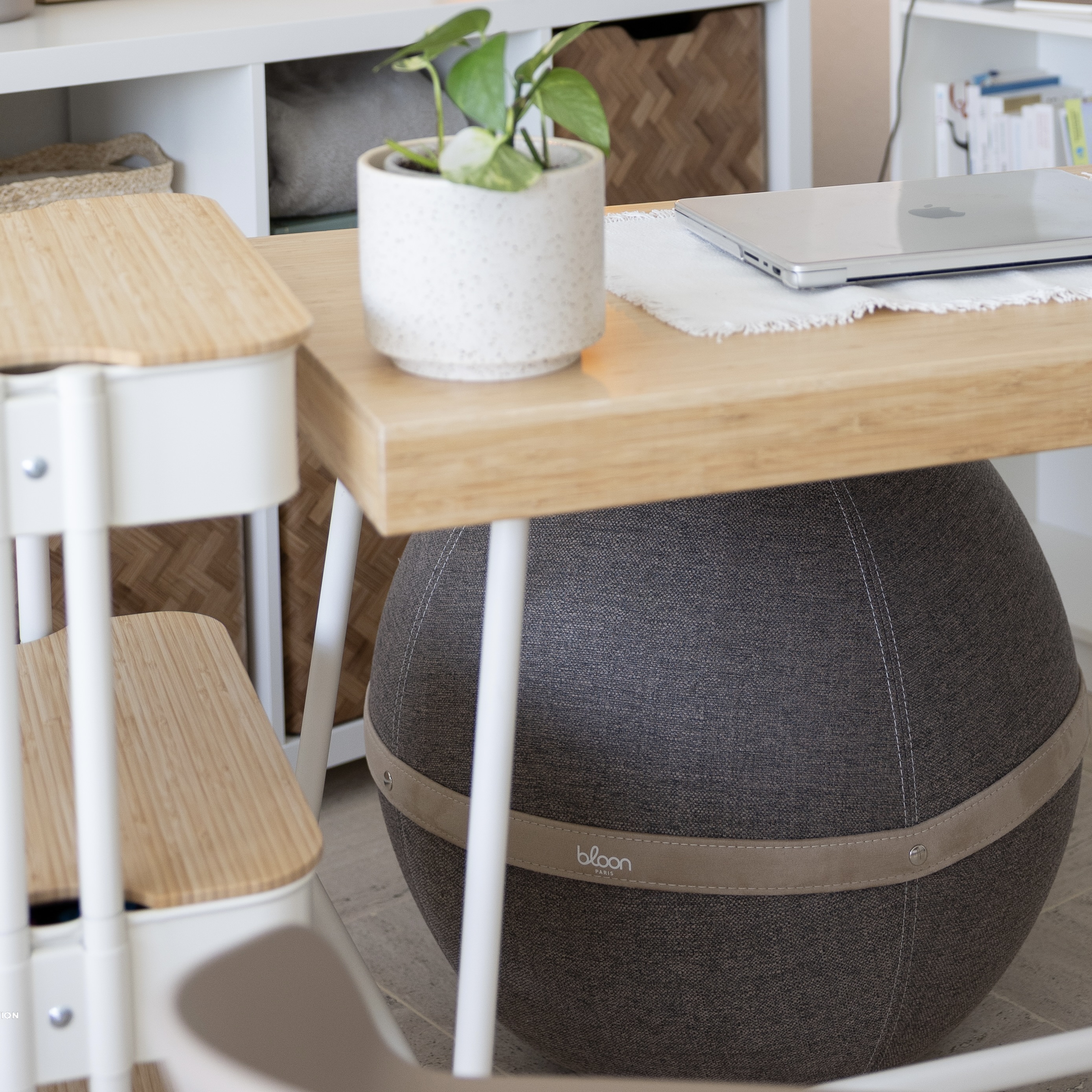
The Bloon seat fits exactly this logic. It isn't a gym ball placed on the floor · it's a seat designed by an osteopath, with a controlled instability that prompts the body to adjust constantly, without conscious effort. The pelvis stays mobile, the spine maintains a degree of tone, and micro-movements follow naturally throughout the day.
What I'm after with it isn't a muscle-strengthening method between consultations. It simply keeps me from staying static.
What it doesn't replace
I'd rather be honest: the Bloon · or dynamic sitting in general · is not a miracle solution. It doesn't replace active breaks, walking, stretching, or indeed osteopathic treatment if you already have established pain. It's one tool among others, suited to my specific use: staying focused and mobile while at the practice.
If you're curious whether this type of seating might suit you, that's exactly the kind of question we can address in a consultation. Every body, every workstation, every pain is different.
References
- Biswas A., Oh P.I., Faulkner G.E., Bajaj R.R., Silver M.A., Mitchell M.S., Alter D.A. (2015). Sedentary time and its association with risk for disease incidence, mortality, and hospitalization in adults: a systematic review and meta-analysis. Annals of Internal Medicine, 162(2), 123·132.
- Santé publique France (2023). Revue de littérature sur l'efficacité des interventions pour limiter la sédentarité en milieu professionnel. Agence nationale de santé publique.
- INRS · Institut National de Recherche et de Sécurité pour la prévention des accidents du travail et des maladies professionnelles. Postures assises et troubles musculosquelettiques. inrs.fr
- Noguchi M., Zehr J.D., Tennant L.M., Fok D.J., Callaghan J.P. (2024). Traditional versus dynamic sitting: Lumbar spine kinematics and pain during computer work and activity guided tasks. Applied Ergonomics, 111, 104044.
- Tanoue H., Mitsuhashi T., Sako S., Inaba R. (2021). An exploratory study on the impact of static and dynamic sitting postures on lumbar and pelvic mobility during visual display terminal work. Journal of Physical Therapy Science, 33(5), 406·412.